01
Identity and revision
The candidate passport is anchored to the relevant style revision, SKU and product group.
Source-led DPP readiness
The Fashion DPP model reads product, supplier, lot, manufacturing, quality and document sources from their canonical owners. Its evidenced scope is internal readiness per finished lot and candidate product group.
Source-led DPP readiness
Scenario / Finished lot
The technical definition says what was planned. Production and lots record what happened. DPP readiness relates these sources and shows where evidence is still missing.
Style, revision, SKU and specified composition belong to Product. They start the assessment but do not prove every material actually used.
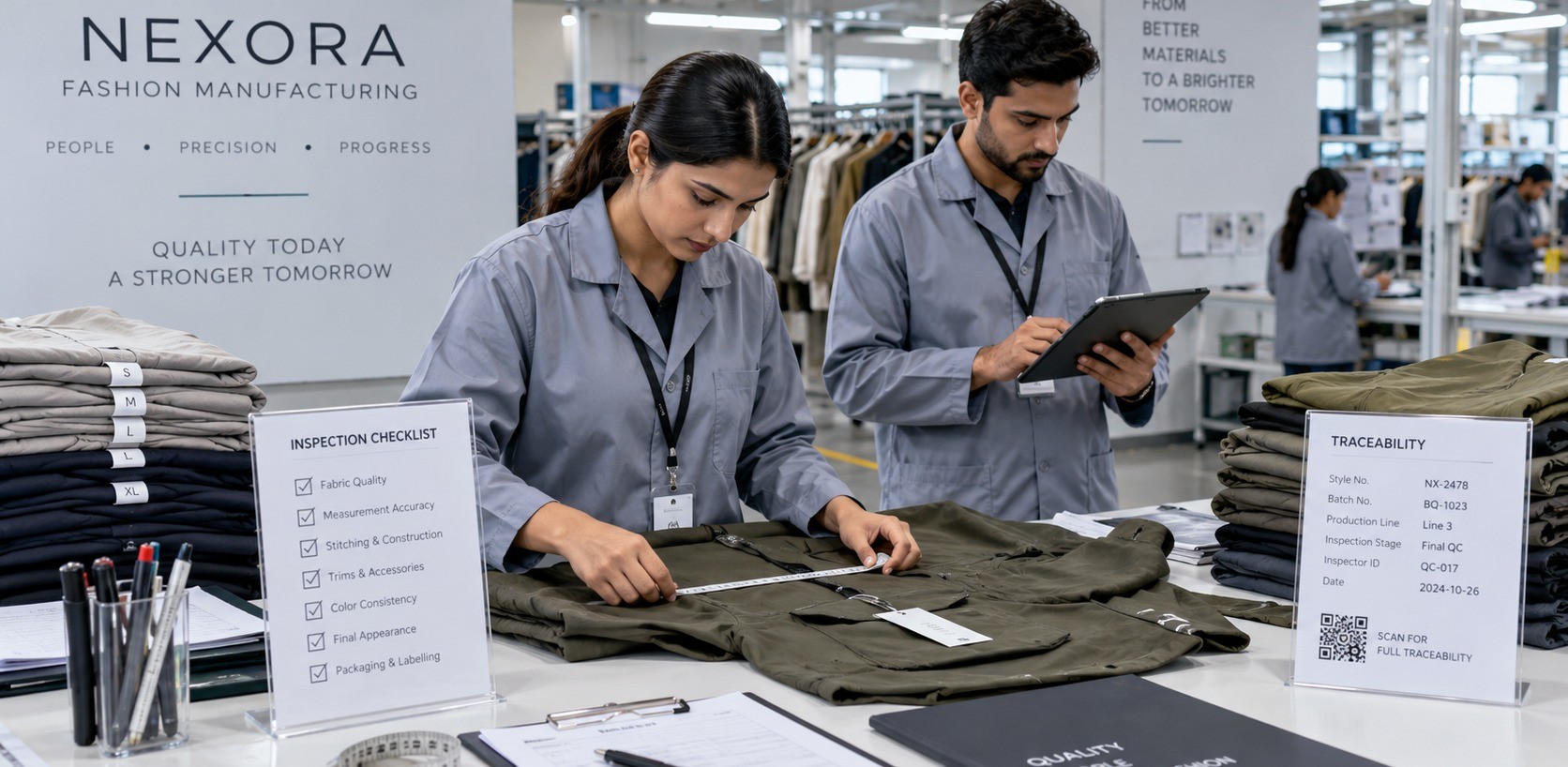
Supplier, lots, consumption and finished-lot genealogy link the item to available operational records.
Inspections, document revisions and source gaps form an internal readiness view before any possible publication.
A gap stays visible and attributed to the source that must be completed; it is never turned into an assumed fact.
01 / Source-led DPP readiness
Every candidate fact comes from a governed source. Gaps stay visible before any later step is considered.
The candidate is tied to the relevant style, revision and SKU.
Specified composition remains distinct from materials actually used.
Supplier and lot identify recorded material sources.
Genealogy links consumption and manufacturing to the finished lot.
Checks and documents supply verifiable facts.
Internal review flags facts present, missing or awaiting validation.
02 / Source-led DPP readiness
The candidate passport is anchored to the relevant style revision, SKU and product group.
Specified composition is distinguished from actual material issue, consumption and finished-lot genealogy.
Readiness identifies missing or unverified source facts before any later publication workflow is considered.
NEXORA Fashion Manufacturing